Ways of working
How I think before I design.
The artifacts, frameworks, and structures I use to make ambiguous problems workable. No narrative needed here — just the work.
Artifacts
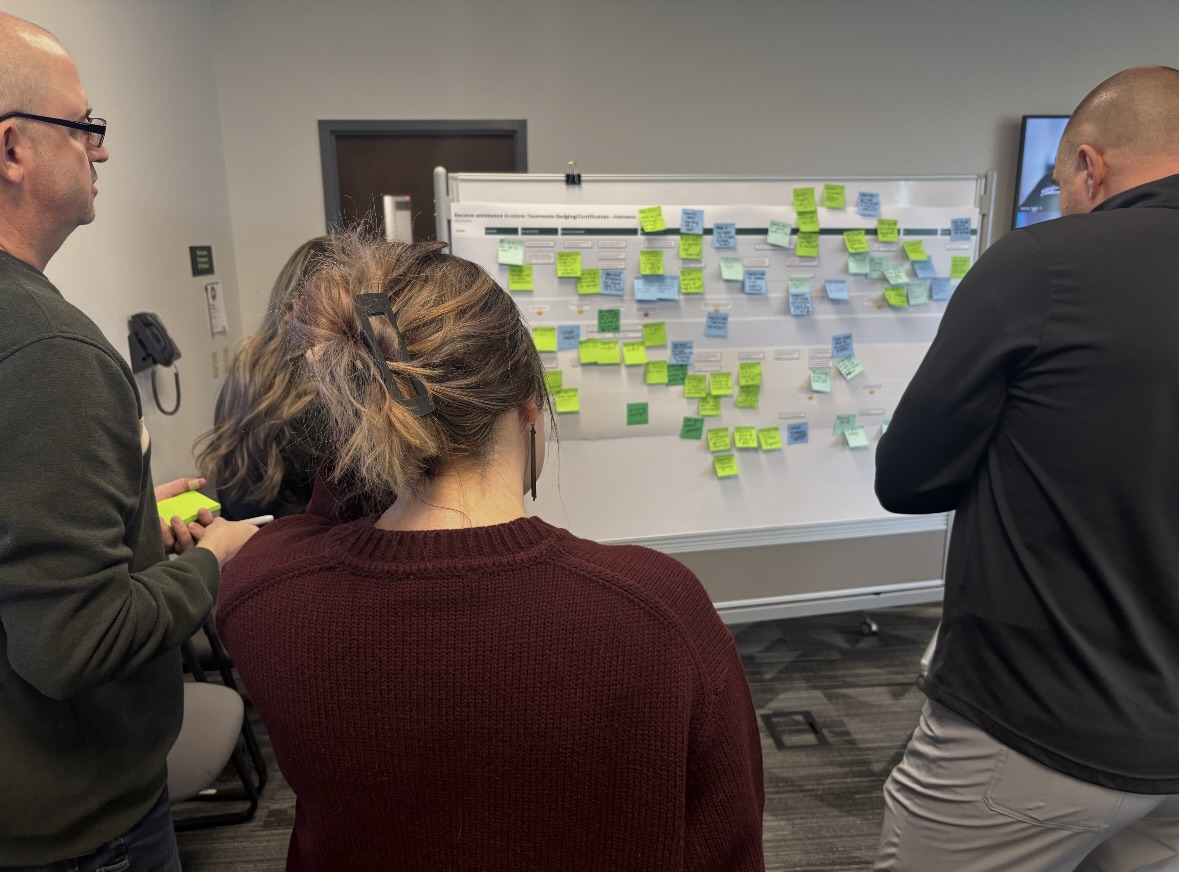
Certification service blueprint
Frontstage / backstage map across Technology, HR, and Store Ops for the teammate certification program. Used to align four teams on a single source of truth before a line of code was written.
Service designTeammate experience journey map
End-to-end journey map built in TheyDo. Became the primary planning and prioritization artifact for the pilot and continues to inform roadmap decisions.
TheyDo · Journey mappingServices capabilities alignment workshop
Facilitation structure for a cross-functional session designed to build shared vision across services capabilities. Includes session arc, activity design, and synthesis approach.
FacilitationPerformance experience principles
Guiding criteria authored for the CTO-level performance pilot — used to evaluate design decisions and keep a high-visibility initiative aligned across stakeholders.
Strategy · Experience principlesService design framework for coaches
A framework defining the end-to-end service design model for a net-new coaching offering. Currently in progress.
Service design · In progressConcept cards / storyboards
A way of making early-stage direction tangible before anything is formal enough to wireframe. Concept cards and storyboards give a shared, high-level picture of what’s possible — something an executive can react to and a product team can translate into actual work. The same artifact, traversing very different audiences. (Content anonymized — available on request.)
Storyboarding · ConceptingAll artifacts anonymized where needed. Full context available on request.
How I approach problems
01
Structure makes ambiguity workable
Not to constrain — to create just enough clarity to act
02
Anchor to the next thing we can learn
Target rigor, don’t skip it — find the next real question
03
Ship the imperfect thing
Real feedback beats the most beautiful unshipped prototype
04
Find the shared language
The best alignment moment is when a room finds its mental model